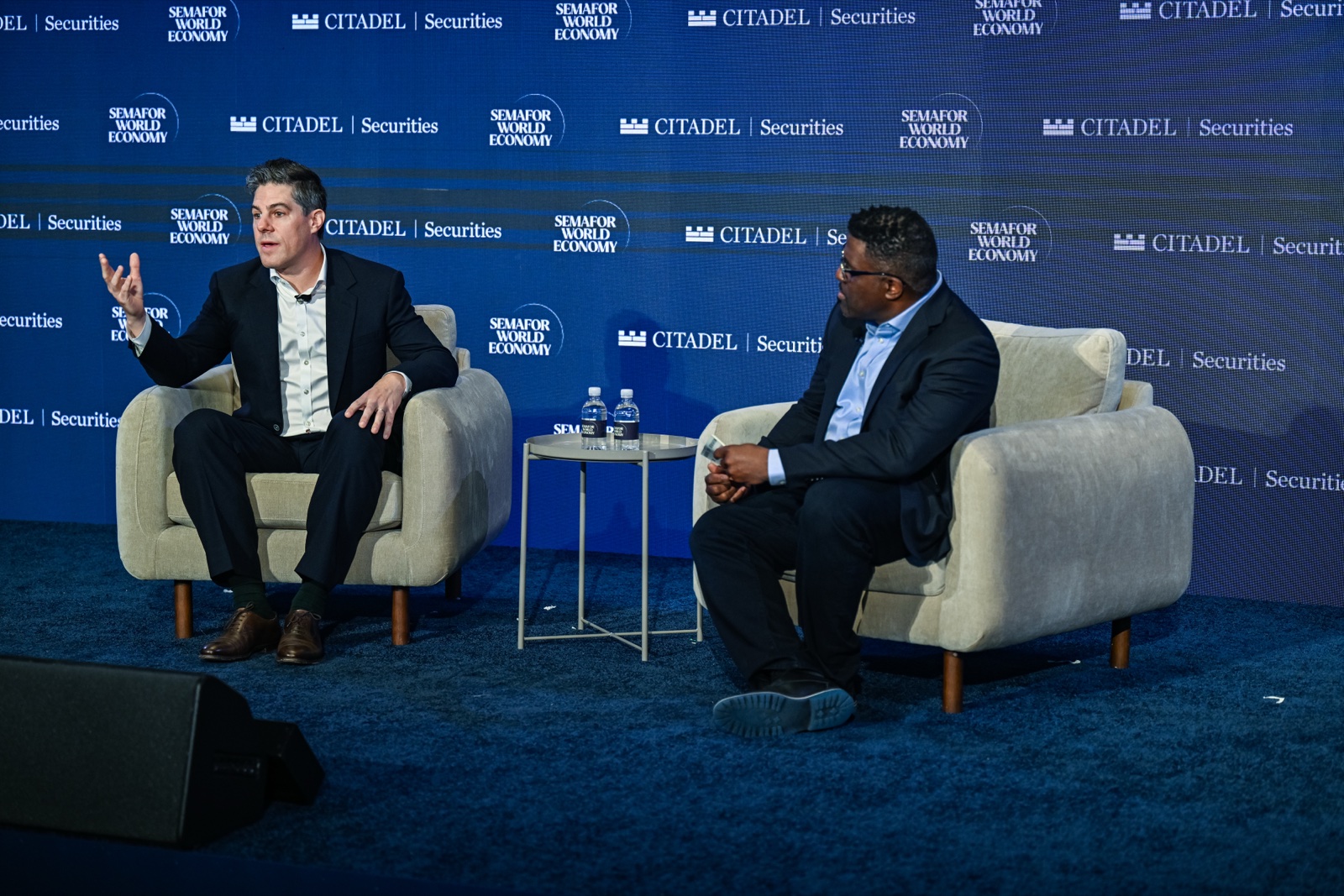
Last week I sat on a panel called "The Next Era of Innovation" at Semafor World Economy 2026 in Washington, DC. Yinka Adegoke interviewed me about Smarkets and prediction markets. The full 14 minutes is below.
A few things I said that I want to write down.
On whether prediction markets are gambling
Gambling is a trade with recreational intent. Investing is a trade with intent to make money. The difference isn't the instrument, it's the intent behind it.
"Is prediction markets gambling? Yes. Is prediction markets investing? Yes. Is Wall Street investing? Yes. Is Wall Street gambling? Yes. It's all these things."
Once you get past the label, the real question is what's wrong with any given market. For most financial markets, the answer is the transaction fees and the bid-offer spread. That's where customers actually get hurt.
On mention contracts
Exchanges are listing contracts on whether specific people will say specific words on camera. Sensitive war contracts. Contracts on prosecutions. One of the big exchanges had a Steve Bannon mention contract running during this conference. Exchanges shouldn't list contracts like that. It's bad taste, it's bad for the industry, and it convinces regulators the whole space is unserious.
The industry needs an adult in the room.
On the competition
The other big exchanges have been great at regulation, great at PR, great at advisory boards. I think they've been less good on the product itself. The TikTok-generation register, instant gratification, swiping, manic, is not what prediction markets should feel like. This is an asset class, not an entertainment feed. The NYSE and the CME don't throw up any contract a user requests, and a serious prediction market shouldn't either.
On where the business actually is
Ninety percent of the economic output of prediction markets will come from sports betting. Political contracts are the loss leader, they get the press. The real disruption is bringing market-driven dynamics to sports betting and replacing the spreads that incumbent bookmakers charge customers.
On prediction markets as news infrastructure
Most of what we read in the news is really a bet on the future. What happens next in Ukraine, what the Fed does at the next meeting, who wins the next election. Horoscopes even. We're obsessed with prognostication, and prediction markets are one of the best tools we have to organize that forecasting at scale. But only if the markets themselves are taken seriously.